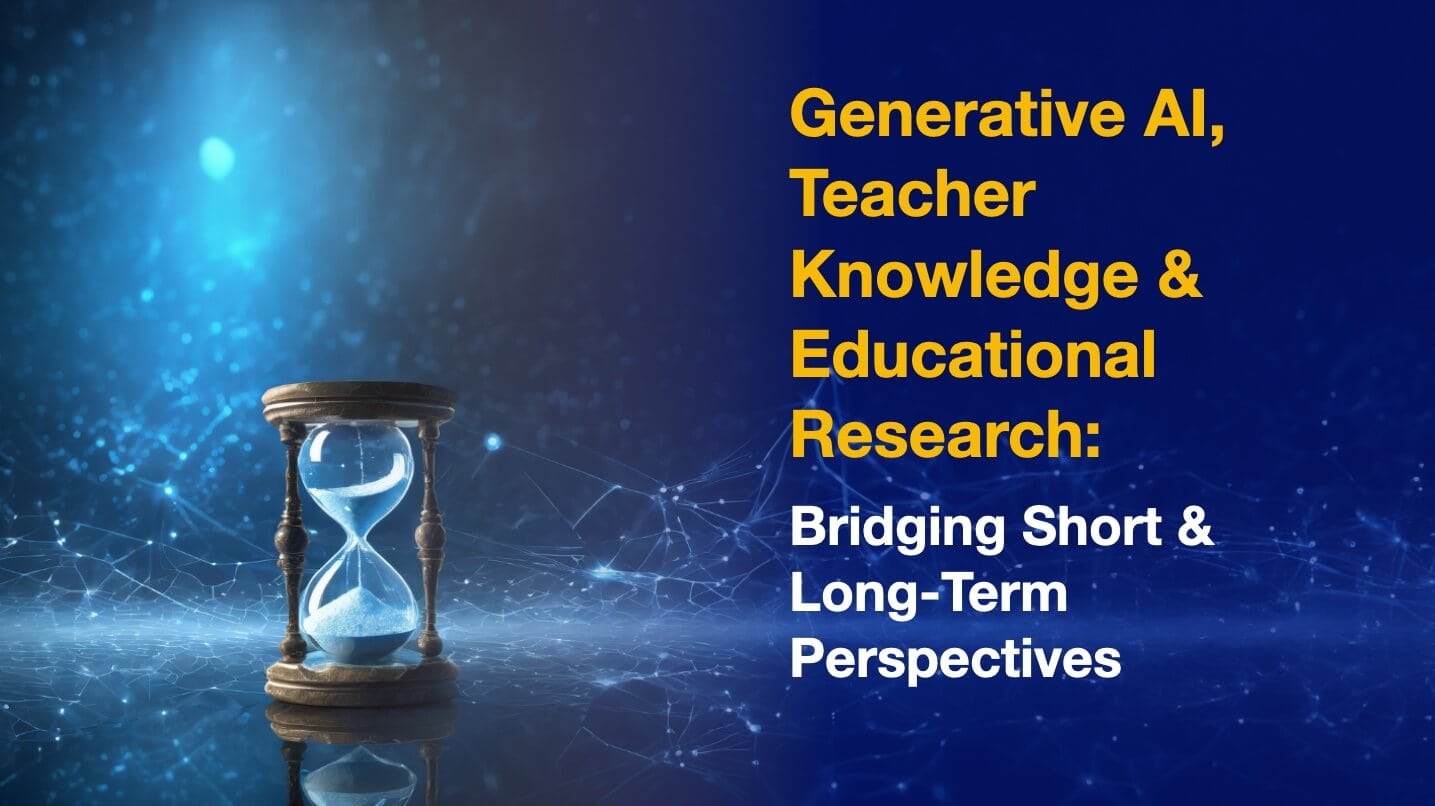
Generative AI, Teacher Knowledge and Educational Research: Bridging Short- and Long-Term Perspectives.

by | Tuesday, February 13, 2024

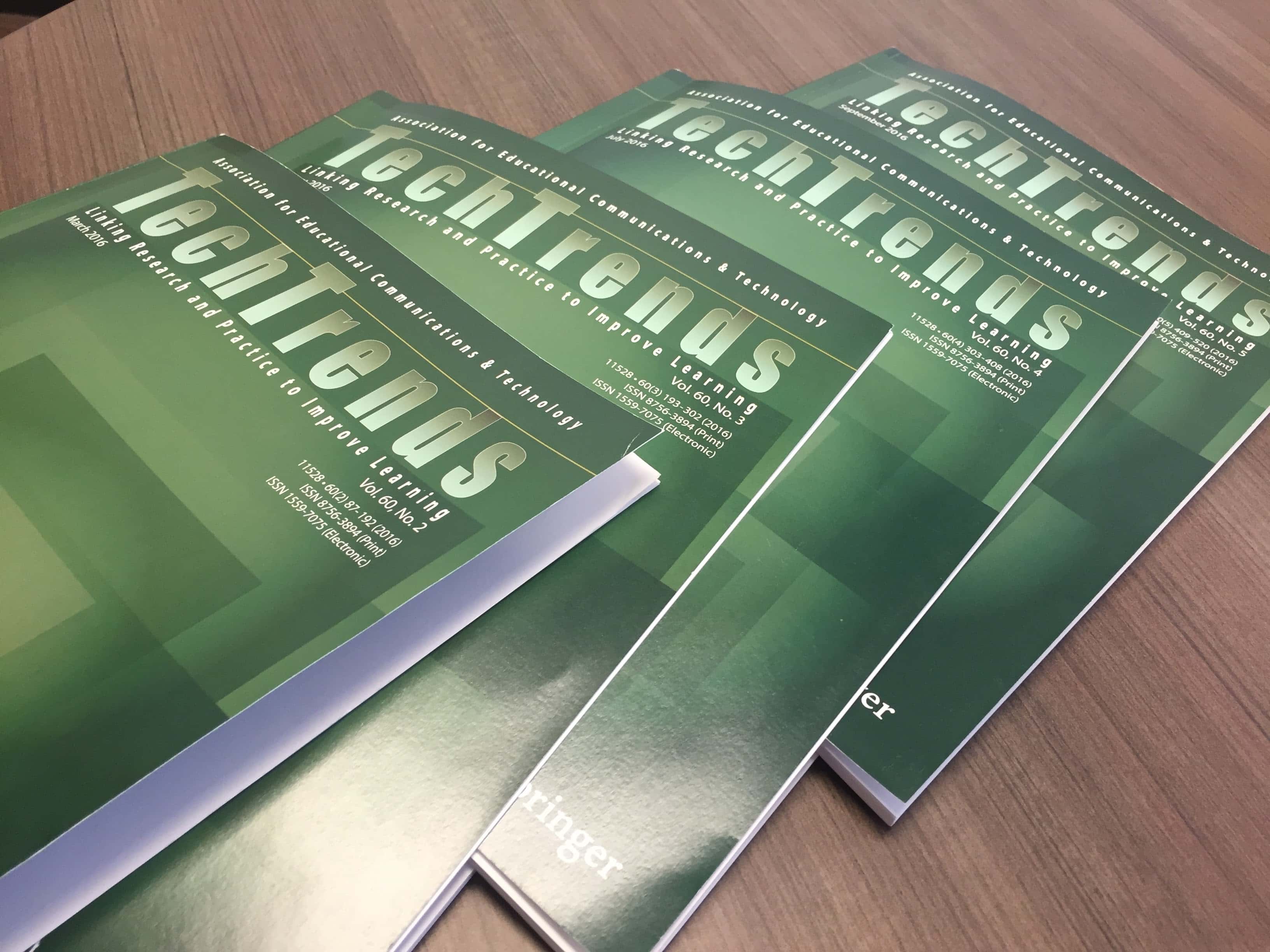
I am pleased to share our latest article in our ongoing column series for TechTrends on the topics of technology creativity and education. Over the past few months we have focused on generative AI, through conversations with thought leaders such as Chris Dede (Harvard), Ethan Mollick (Wharton), Kyle Jensen and Andrew Maynard (ASU) along with some more empirical pieces, such as one on our research with school leaders and their responses to generative AI.

In this latest piece we step back from these conversations to look at the bigger picture. With ChatGPT and tools like it exploding in popularity, we believed it was crucial to examine, what I have elsewhere called, the “true nature” of these technologies. It is only then that we can leverage their potential while addressing their risks.

In this latest article we seek to offer a balanced perspective, focusing on teacher knowledge and educational resarch – stressing the need to consider both short and long-term impacts of AI. In the immediate term, it’s vital we empower teachers and students to use ChatGPT productively, creatively, and ethically. But we must also anticipate AI’s deeper cultural effects as it transforms relationships, trust, and social patterns.

Complete citation and link given below:

Mishra, P., Oster, N., & Henriksen, D. (2024). Generative AI, Teacher Knowledge and Educational Research: Bridging Short- and Long-Term Perspectives. TechTrends. https://doi.org/10.1007/s11528-024-00938-1

Abstract: This article reflects on the transformative nature of generative AI (GenAI) tools for teaching and teacher education, both reflecting on current innovation and consider future potentials and challenges. In that sense, we aim to position the field of education going forward with the implications of new technologies like GenAI for education and educational research. We argue the need for a dual-lens approach. First and foremost, practice and research should focus on the here-and-now, i.e. how to design powerful learning experiences for pre-service and in-service teachers for them to be productive, creative, critical, and ethical users. But there is also a need for a deeper, longer view—based on sociological and historical trends and pat- terns that will influence the socio-techno-cultural matrix within which education functions in the long term. We begin with a brief introduction to GenAI technologies. This is followed by an in-depth discussion of the fundamental nature of GenAI tools—their similarities and differences to prior technologies, and the implications for teacher education and research.
Topics related to this post: Publication

A few randomly selected blog posts…

Systems level change in education

Systems level change in education

How do you design for change in complex systems—like education? Implementing large-scale changes within educational systems can be a challenging task. Doing so requires many actors, working at different organizational levels (and perhaps across organizations), to not...

France Sings for USA

In a previous post I talked about Pangea Day and the Imagine anthem series, where people from one country sing the national anthem of another. Here's another one, France sings for the USA. Enjoy. [youtube]http://www.youtube.com/watch?v=3T60NaNPiMg[/youtube]

The distance education revolution

TCRecord this week features an article by Gary Natriello titled Modest Changes, Revolutionary Possibilities: Distance Learning and the Future of Education. As the abstract says In this essay, I take stock of the developments shaping distance learning and consider the...

A systems view of technology infusion

A systems view of technology infusion

One of the significant changes in my way of thinking about technology integration has been a shift in focus—away from designing training and programs that target individual teachers to designing systems (both at K12 and higher education levels) that support teachers...

What we get wrong about 21st century learning

What we get wrong about 21st century learning

Click on diagram to download a hi-res version Back in 2013 we proposed a framework for 21st century learning based on a synthesis of a range of reports, books, and articles (Kereluik, Mishra, Fahnoe & Terry, 2013 & diagram above). That article...

Paris City of Love

Paris has been on my mind for the last 24 hours (as it has been for many others around the world). I have been lucky to have had the opportunity to spend some time in the city - and Paris is one of my favorite places in the world. Paris, anyway you look at it (a new...

The rise of TPACK

Matt Koehler just created a webpage that tracks the citations of our original TCRecord article, as reported by Google Scholar, in real time. The reference is as follows: Mishra, P., & Koehler, M. J. (2006). Technological Pedagogical Content Knowledge: A new...

Who wrote this poem?

Back when I was a graduate student I got bitten by the bug of palindromic poetry - poems that read the same when read backwards. This is consistent with my love for ambigrams and other kinds of symmetrical wordplay. I had posted them on the web a while ago...

0 Comments

Submit a Comment

Your email address will not be published. Required fields are marked *