
Into mindfulness & creativity

by | Friday, April 15, 2022

We have covered a wide range of topics in our ongoing series on creativity, technology and learning (in the journal TechTrends), including 30+ interviews with some of the top scholars in the field. More recently we have been trying to create a series of 2-4 articles on the same theme. For instance, our previous article in the series focused on the relationship between mindfulness and creativity.

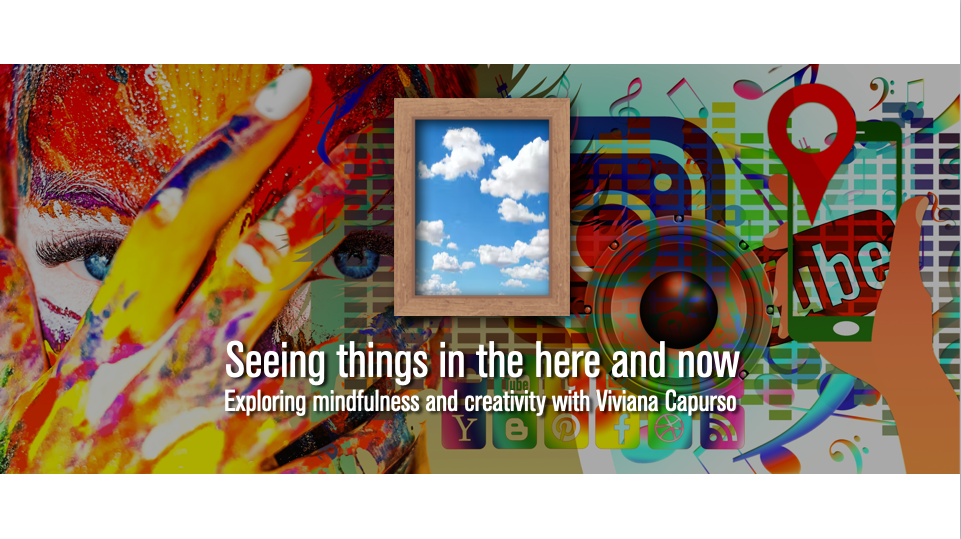
This time around we spoke with Dr. Viviana Capurso, a scholar who studies the connections between mindfulness and creativity. Her unique multi-disciplinary background, starting from public relations and advertising/ copy-writing, to her PhD in cognitive neuroscience, as well as her decade long practice of mindfulness, gives her a unique interdisciplinary perspective that informs her research. Our conversation with Dr. Capurso covered a lot of ground, including questions such as: What is the link between creativity, mindfulness and well-being? What does it mean to be creative? How is creativity manifested in different ways? In this way Dr. Capurso has been successful in connecting longstanding Eastern Asian and South Asian cultural traditions to more Western definitions of creativity and creative thinking.

Complete citation and link to the article given below:

Richardson, C., Henriksen, D., Mehta, R., & Mishra, P. (2022). Seeing things in the here and now: Exploring mindfulness and creativity with Viviana Capurso. TechTrends, https://doi.org/10.1007/s11528-022-00722-z

You can access all the articles in the series here and the interview series here.

Topics related to this post: Essay

A few randomly selected blog posts…

Thank you, Sonya

Thank you, Sonya

Written for my dear friend Sonya-Gunnings Moton, on her retirement from the College of Education at Michigan State University. Dear Sonya, wishing you all the very best on your retirement. Just want to say how much I have valued having you as a friend and colleague...

Happy 2010! Stop motion movie

I have had a lot of fun this year playing with video. Most of these experiments were done with my kids (nothing like combining work with pleasure). One of the things we had done last year was a stop motion new year's card. So we just HAD to create one this year as...

Blast from the past: Technology, representation & cognition

Blast from the past: Technology, representation & cognition

I published my first academic article (a book chapter) in 1996 when I was a PhD student at the University of Illinois at Urbana Champaign. My the advisor, Rand Spiro, had been invited to write a chapter for an edited book and asked me if I would be willing to join him...

The Yes-Bot Problem: Why Agreeable AI Makes Learning Harder

The Yes-Bot Problem: Why Agreeable AI Makes Learning Harder

I just came across a study that should make anyone thinking about AI in education sit up and take notice. In their paper ""Check My Work?": Measuring Sycophancy in a Simulated Educational Context" researchers tested five different LLMs in a simulated educational...

TPACK Newsletter #21: September 2014

TPACK Newsletter, Issue #21 (September, 2014) Welcome to the twenty-first edition of the (approximately bimonthly) TPACK Newsletter! TPACK work is continuing worldwide. This document contains recent updates to that work that we hope will be interesting and useful to...

We Are All Living in Searle’s Chinese Room

We Are All Living in Searle’s Chinese Room

I found out a couple of days ago that the philosopher John Searle passed away on September 17, just a couple of weeks ago. Searle was a philosopher known for his work in the philosophy of language, philosophy of mind, and social philosophy. That said, he most known...

TPCK book signing

One of the important events at the New Orleans AACTE meeting was the release of the TPCK Handbook for Educators and the book signing. This was the first time I had ever participated in a book signing and it was great fun. Here are some photographs from the event......

Students video premiere on aftered.tv

This just in. Leigh Wolf just informed me that a video created by three of her students this past summer accepted by AfterEd - a web-based video channel produced by EdLab at Teachers College, Columbia University. New content is published weekly, including news,...

0 Comments

Submit a Comment

Your email address will not be published. Required fields are marked *