
BLOG
Questioning Assumptions: Podcast episode
I was recently invited as a guest on the Better Learning Podcast. I had a great conversation with the host, Kevin Stoller (and boy does he have a voice designed for audio!). Turns out that we both went to Miami University, though our paths didn't overlap or intersect....
BAIS: Implicit Bias in AI systems
I don't usually post about articles written by other people (however much I may like the study or the authors) but I am making an exception this time - mainly because I believe that this is a critically important piece of research that deserves wider recognition. In...
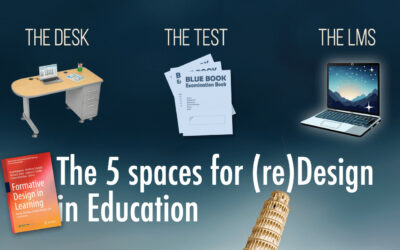
The Desk, the Test, the LMS: The 5 Spaces for (re)Design in Education
What do a teacher's desk, the PISA test and Learning Management Systems (LMS) have in common. Apart from being educational technologies, they are also the heart of a book chapter that Melissa Warr, Kevin Close and I just published in a book titled Formative Design in...

Design\Ethics\AI
Technologies like remote proctoring software and advanced language models are no longer futuristic concepts. They're here, and they're reshaping how we learn and how we teach. But with these advancements come critical ethical considerations. The deployment of these...
Designing for Creative Learning Environments: New chapter
In 2017, Carmen Richardson and I co-authored a paper (Richardson & Mishra, 2017) introducing SCALE: Support of Creativity in Learning Environment: SCALE, a tool created to evaluate how well educational settings foster student creativity. Unlike formal evaluation...

Can we please slow it all down? School leaders take on ChatGPT (new article)
We have, over the past months, explored a range of issues related to generative AI, education, and creativity in our column series, for TechTrends, with the goal of fostering dialogue among stakeholders—students, parents, educators, and policymakers—to ensure these...

Vikram OR Vetaal, A Halloween Story (co-authored with AI)
A few weeks back, Sean Leahy – friend, tech aficionado, futurist, and the co-host of the Learning Futures Podcast – reached out to me via email with an intriguing proposal. He was playing with the concept of harnessing generative AI to craft Halloween stories. The aim...
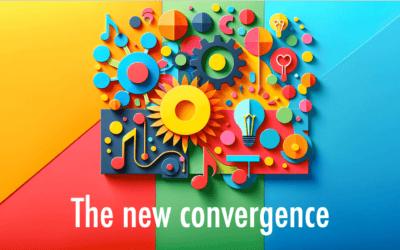
The new convergence
I recently received an email from dean recommending this post titled Thoughts on Now and Then by Andrew Hickey. In this extended essay Hickey provides his thoughts on the new Beatles remake, Now and Then. The essay is a thoughtful and loving analysis of human...
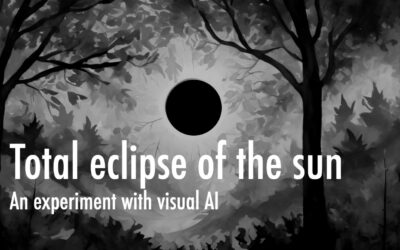
Total eclipse of the sun: An experiment with visual AI
In a previous post I explored some of the visual capabilities of ChatGPT. This is a continuation of those experiments, where ChatGPT helped me identify the date and time of a solar eclipse based on a photo I took decades ago, as a graduate student at the University of...
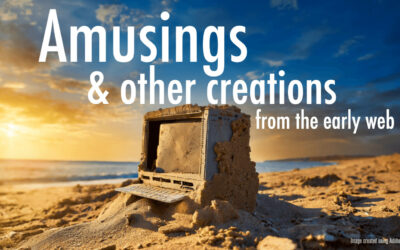
Amusings & other creations (from the early web)
I have been blogging for 15 years now, but I have had a website for much longer than that. I built my first website back in 1998 just as I was graduating from UIUC and entering the academic job market. I still remember the URL (www.uiuc.edu/~pmishra). I designed a...

A-EYE: When AI can see
AI can now see! And talk to you about what it sees! ChatGPT released its latest upgrade - the ability to not just create images but also to interpret them. I had been waiting for a while now to get access to these new vision features - and just this morning it popped...
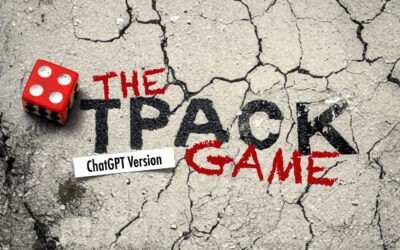
The TPACK game: ChatGPT version
Back in the day, Matt Koehler and I had come up with a game to help teachers creatively explore the TPACK framework. There are some traces of this on this website (see here and here) but many of these links are dead. One that still exists is this YouTube video by Lisa...
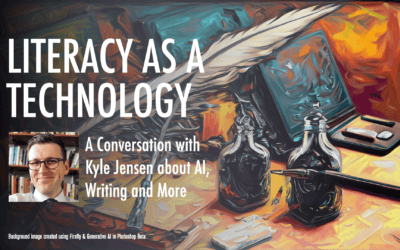
Literacy as a Technology: A Conversation with Kyle Jensen about AI, Writing & More
Welcome back to our column series, exploring the nexus of technology, creativity, and education. We've spoken with experts like Chris Dede from Harvard and Ethan Mollick from Wharton, focusing on how AI is reshaping creativity and education. We're in a pivotal era of...
Learning to see complexity: Teachers designing amidst indeterminacy
Note: The image above was generated by Adobe Firefly and edited using Photoshop beta. Teaching is a profession steeped in complexity. This complexity manifests in various ways: the diverse skill sets, interests, and backgrounds students bring to the table; the...
Designing learning in a transformed world: Keynote
I was recently invited to present virtually at The Heart of Innovation Summer Summit, organized by the Heartland Area Education Agency in Iowa. The video of my talk can be seen below. Maybe my first serious keynote talk about generative AI and education. Enjoy...
Teacher Knowledge in the age of ChatGPT and Generative AI
Update March 2024: This paper received the JDLTE Outstanding Research Paper Award recognizing "the single article from the prior volume year with the highest possibility to advance the field of teacher education, based on the criteria of potential impact and...
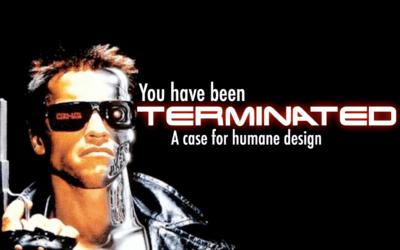
You have been terminated: A case for humane design
Good design cares about details. Good design is humane. Bad design is neither. Designers must bring this attention to detail and humanity to every aspect of their work. And this applies even the invisible parts. This, caring for the "invisible" details, is captured in...
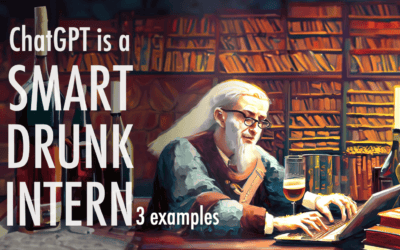
ChatGPT is a smart, drunk intern: 3 examples
Harry Frankfurt the philosopher passed away, this past Sunday. He was 94. As the NYTimes obituary said, he was... ... a philosopher whose fresh ideas about the human will were overshadowed in the broader culture by his analysis of a kind of dishonesty that he found...
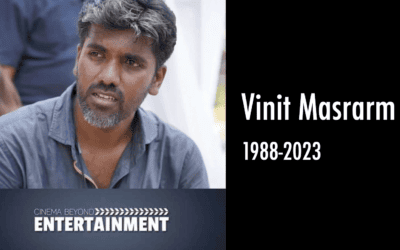
Vinit Masram (1988 – 2023)
I found out about Vinit Masram's passing a week or so go. I did not know Vinit personally, having met him just once, at IDC's Golden Jubilee celebrations in 2020. But the news of his death hit me hard. I had been a fan of his work for a long time - having stumbled on...
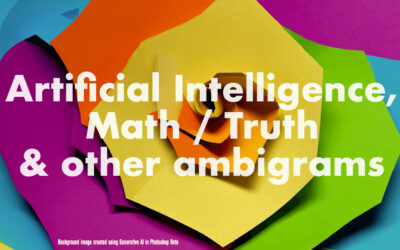
Artificial Intelligence, Math / Truth & other ambigrams
Lovers of mathematics relish challenges, enjoying the manipulation of numbers and geometrical figures, seeking and creating patterns. Their fascination sometimes extends into language and other seemingly unrelated domains. An intriguing example of visual wordplay,...
Creativity, AI & Education: A Reflection & an Example
Update (added March 17, 2024): There are a few more instances of using GenAI in creative ways that I would like to add to the list below, in particular 2 posts about using the the image analysis capabilities for ChatGPT: When AI can see and Total eclipse of the sun...

Wine + GPT4 + Code Interpreter: WOW!!
OpenAI just released Code Interpreter. It allows you to execute Python code within a live working environment. One of the things that it allows us to do is take data files and conduct data analysis and create graphs and charts. Not knowing what that meant I decided to...
The joy of learning: A reflection
What is this thing called learning? What does it mean to learn something? What makes us want to learn? Why is it fun? Why do we want to know? Even as educators, we often don't take the time to ask ourselves these foundational questions. So it is rewarding when we get...
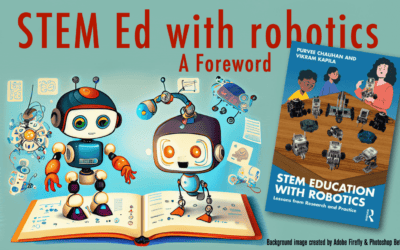
STEM Ed & Robotics: A foreword
Vikram Kapila is a professor in the Department of Mechanical and Aerospace Engineering at NYU Tandon School of Engineering. Vikram and his research associate Purvee Chauhan recently published a book titled STEM Education with Robotics: Lessons from Research and...
It Takes Two: A (personal) exploration
I had written earlier about a contest organized by Dark ‘n’ Light (an e-zine) around the theme of "IT TAKES TWO" and had shared some of my experiments, exploring this theme, using Generative AI. You can see my experiments at: It takes two: A scientific romp using AI...
TPACK in context: Call for papers
Technology integration in teaching is deeply rooted in specific contexts. One could argue that contextual knowledge is of critical importance to teachers and the absence of it would limit, in significant ways, their effectiveness and success as an educators seeking to...
TPACK Handbook, 3rd Edition: Call for proposals
I have been an academic for almost a quarter of a century (longer, if you include my years in graduate school), and it is a bit humbling that the work for which I (and my partner in crime, Matt Koehler) are best known for is the creation of a Venn diagram—which, when...
It Takes Two: A scientific romp using AI
Dark 'n' Light is an e-zine that "explores science, nature, social justice and culture, through the arts and humanities." It is a labor of love by a small, dedicated team led by Susan Matthews, former legal and policy wonk, turned editor and podcaster. I came to know...
Teaching an old dog new tricks
I have been playing with Photoshop Beta, a version of Photoshop with a range of AI-powered tools that let you add, extend, or remove content from your images using simple text prompts. This is similar to Adobe Firefly, a web-based image manipulation / generation tool,...
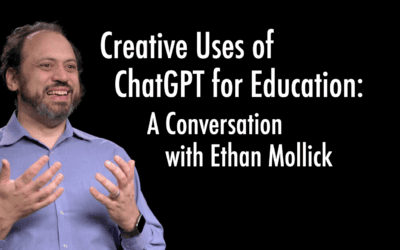
Creative uses of ChatGPT for Education: A conversation with Ethan Mollick
Ethan Mollick is a professor at the Wharton School of Business and studies and teaches innovation and entrepreneurship. He also leads Wharton Interactive, an effort to democratize education through games and simulations. He is also one of the most innovative users of...