
Ambigrams animated: 3 new designs

by | Monday, September 15, 2014

I love creating ambigrams, words written in such a manner that they can be read from multiple perspective – rotated, reflected and so on. These designs are much easier to “grasp” when printed on paper since you can actually turn the paper around, hold it against a mirror or hold it against the light while looking at it from the other side. All that is harder to do on a webpage. So I have been thinking of ways of making the entire process a bit more interactive (sort of what John Langdon does so neatly on his site). So after poking around with css and javascript and WordPress I think I finally have a solution. So below are three designs (for the words “internet,” “Angel” and the word-pair “Praise-Blame” that you can actually rotate by 180 degrees and and reflect (in two different ways, along the x and y axes) to bring out the symmetry or the surprise inherent in the designs. Here they are below:
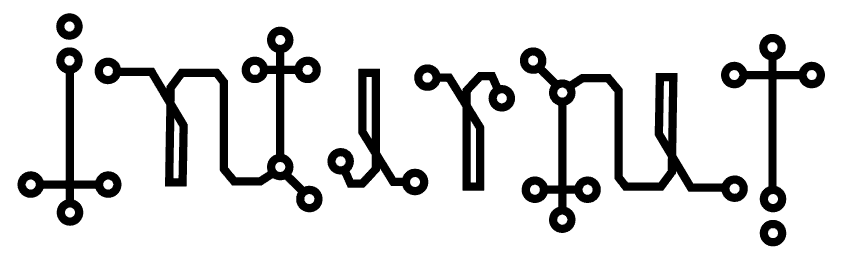
   

Internet


Rotate

The first one is a design for the word “Internet” that is symmetric even when rotated by 180 degrees. Click the button above and see for yourself.
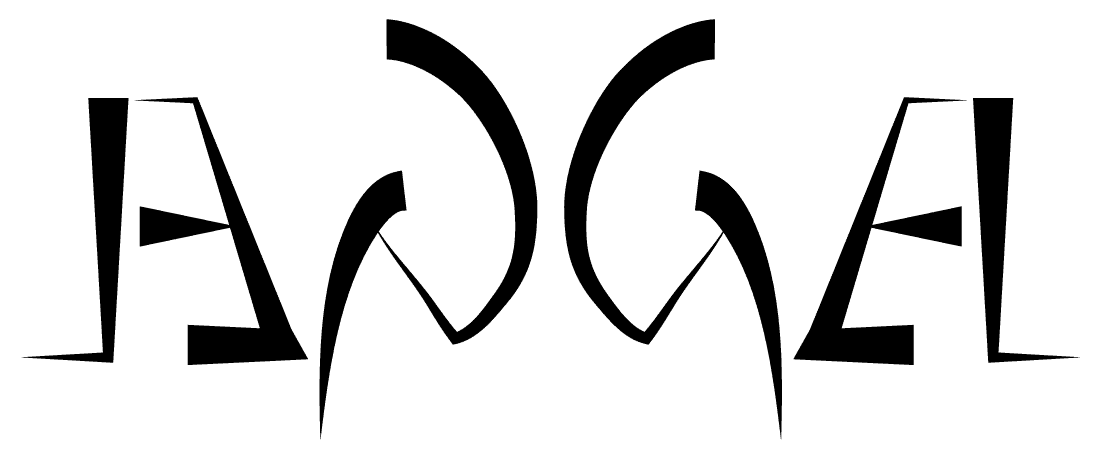
Angel


Reflect

The second one is a design for the word “Angel” which is symmetric left-to-right i.e. the design will look the same when reflected in a mirror on the wall (something Hofstadter calls, quite naturally a “wall reflection”).


Praise Blame


Reflect

The third and final design is for the word “Praise” which when reflected horizontally (a “lake reflection”) becomes the word “Blame.”

Hope you like these three ambigrams and the ability to manipulate them to enjoy the beauty in the designs. Lots more to come…
Topics related to this post: Creative Work

A few randomly selected blog posts…

Arthur C. Clarke, RIP

Arthur C. Clarke, popularizer of science and science fiction writer died today. He was 90. Clarke was one of my favorite authors growing up though I haven't read him in a while. I still remember the thrill I felt when I read the last sentence of "Rendezvous with Rama"...

GenAI & Trans-disciplinary Creativity: New Book Chapter

GenAI & Trans-disciplinary Creativity: New Book Chapter

What does the advent of AI mean for human creativity? That is the focus of a new book, Generative Artificial Intelligence and Creativity: Precautions, Perspectives, and Possibilities, edited by Matthew J. Worwood and James C. Kaufman. And as it happens, Danah...

Teacher as filmmaker: An update from down under

Back in 2007, I was second author on a paper titled Teacher as Filmmaker, in which we described an approach to teacher professional development that involved teachers creating short, evocative movies, which we called iVideos. You can read the paper and abstract...

Picturing poetry

Nashworld pointed me towards PicLits a website that he describes as being "part visual literacy, part refrigerator poetry, part… fun." Check out his posting or visit PicLits.

Interesting links

Here are some links that came up during our discussion today regarding web-based software for education. Shodor foundation Curriki Gizmos from Explore Learning Illumination genetics tools

TPACK Vanity (v. 2.0)

Back in 2006 Matt and I took a bunch of work that we had been doing in the area of technology integration for teaching and pulled it together into one broad theoretical framework and published it in TCRecord. The TPACK framework as it has come to be known has been...

TPACK & Philosophy

TPACK & Philosophy

I often receive emails about the TPACK framework and even though I have not worked in that space for a while, I do feel obligated to respond. That said, I usually do not feel the need to document my responses. Once in a while, however, I get a question that demands a...

Fear, awe and the algebra of the pendulum

In response to my previous posting titled How artists work, Leigh Wolf pointed out a book (Curious Minds: How a child becomes a scientist). I had not heard of this book before and a quick google search led me to this page. Edited by John Brockman (the brains behind...

Contemplating creativity

Contemplating creativity

Photo/Image Credit: Punya Mishra Dr. Jonathon Plucker is an educational psychologist at Johns Hopkins University where he is the Julian C. Stanley Professor of Talent Development in the School of Education. He has received numerous recognitions for his work, including...

0 Comments

Submit a Comment

Your email address will not be published. Required fields are marked *